




You got here by taking risks that worked. By moving when others hesitated. By trusting instincts sharpened over decades of consequences. Then success removed the conditions that sharpened them. No more scarcity. No more unfiltered feedback. No more mistakes that cost you personally.
The Edge of Possibility follows ten explorers into that exact trap. Reinhold Messner, whose track record became more dangerous than the mountain. Bob Marshall, who inherited a fortune and went to Alaska to find out whether he was worth anything without it. Joe Simpson and Simon Yates, and the rope that had to be cut. Their expeditions compress into weeks what plays out in families over generations, and the pattern is the same either way: the thing that got you to the edge is the thing most likely to fail you at the edge.

Scott brought custom motor tractors and scientifically calculated rations. Amundsen brought methods he'd learned from Inuit hunters, tested over centuries. Only one of them made it home. The time to experiment is when failure costs you an inconvenience, not everything.

Sarah Marquis spent three years walking across Asia, rewriting her route every time the map failed her. Changing course isn't the same as giving up on where you're going.

Reinhold Messner survived Everest without oxygen, then found his own confidence more dangerous than the mountain. The methods that made you successful can quietly stop matching the conditions you're in.

Erling Kagge skied 814 miles across Antarctica alone, seeing nothing but identical white for fifty days. Progress is often invisible long before it's undeniable.
You've spent decades making decisions nobody else could make. Now the question is what happens when you stop making them.
The third generation rarely loses the money through stupidity. They lose it because they were never tested the way the first generation was.
If you've ever wondered whether a strategy protects your wealth or justifies someone's fee, this book is an argument for asking.
History, biography, and expedition narrative, used to get at questions that spreadsheets can't settle.
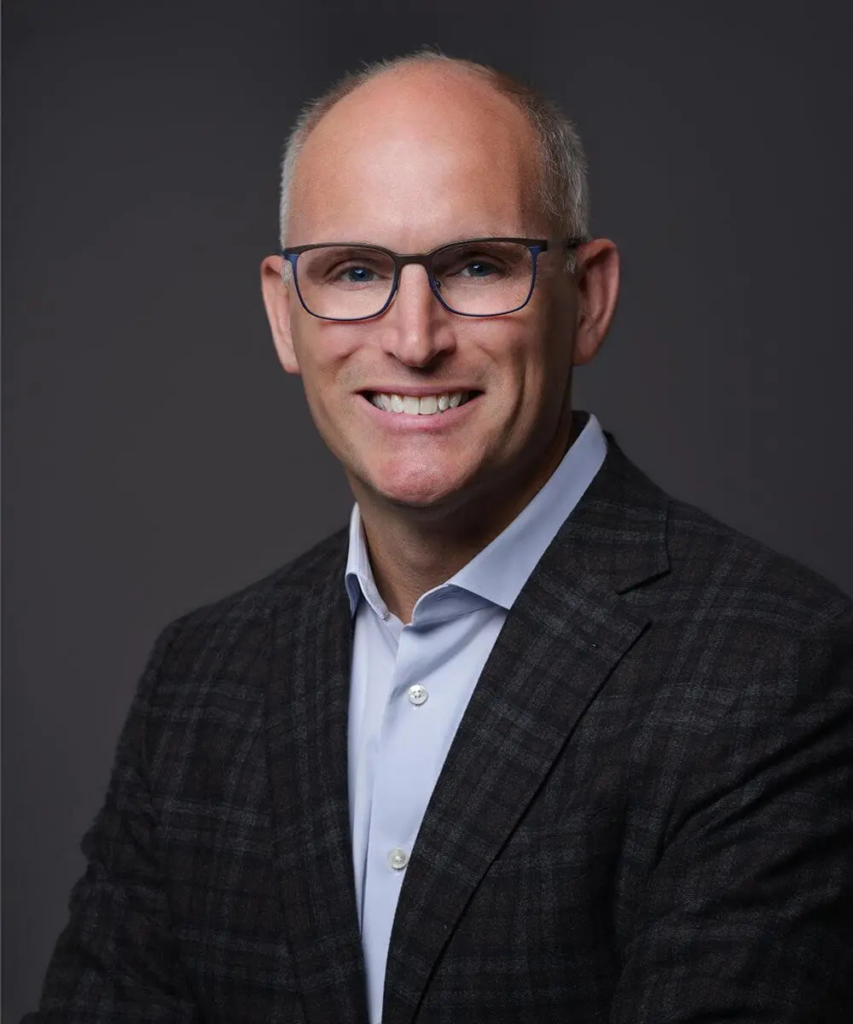
Steve is the founder of GEM Asset Management, where he has worked with successful families since 2003. A graduate of Hillsdale College, he considers his history degree the best preparation he ever had for this work.
Over two decades in, he’s found that the hardest financial decisions are rarely mathematical ones. Whether to sell the business. How much to leave the children. When to stop defending a plan that’s stopped working. Those questions turn on judgment, temperament, and how a person behaves under pressure, which is why he reaches for history, biography, and philosophy as often as for a spreadsheet.
The Edge of Possibility grew out of that habit. The explorers in it faced decisions with far shorter timelines and far worse consequences, and what they reveal about pressure applies well beyond the ice.
A few things people usually want to know before requesting a copy.
It uses ten true expeditions — from Scott and Amundsen’s race to the South Pole to Alex Honnold’s ropeless ascent of El Capitan — to examine how people make decisions under extreme pressure, and what those decisions reveal about protecting wealth across a lifetime and a generation.
Steve Alexandrowski, CFP®, founder of GEM Asset Management in Plymouth, Michigan. It’s his first book.
Yes. Request a copy and the GEM Asset Management team will mail one to you at no cost. There’s no charge for the book or for shipping.
No. The book is available to anyone who requests one. There’s no obligation attached to it.
We mail copies as soon as we can. If you haven’t received your copy after 4 weeks, feel free to drop us an email to check on the status.
Yes. If you’d rather read it on a screen, let us know when you request your copy.
Physical copies are mailed within the United States only. If you’re outside the US, request a digital copy instead.
Interested in speaking to our team about your financial future? We’re taking on new clients today. Fill out your information here, and our team will reach out to you to get the conversation started.
We use cookies to improve your experience. By continuing to use this site, you consent to our use of cookies.
Manage your cookie preferences below:
Essential cookies enable basic functions and are necessary for the proper function of the website.
Google reCAPTCHA helps protect websites from spam and abuse by verifying user interactions through challenges.
Statistics cookies collect information anonymously. This information helps us understand how visitors use our website.
Google Analytics is a powerful tool that tracks and analyzes website traffic for informed marketing decisions.
Service URL: policies.google.com (opens in a new window)
Marketing cookies are used to follow visitors to websites. The intention is to show ads that are relevant and engaging to the individual user.
Facebook Pixel is a web analytics service that tracks and reports website traffic.
Service URL: www.facebook.com (opens in a new window)