[00:00.0]
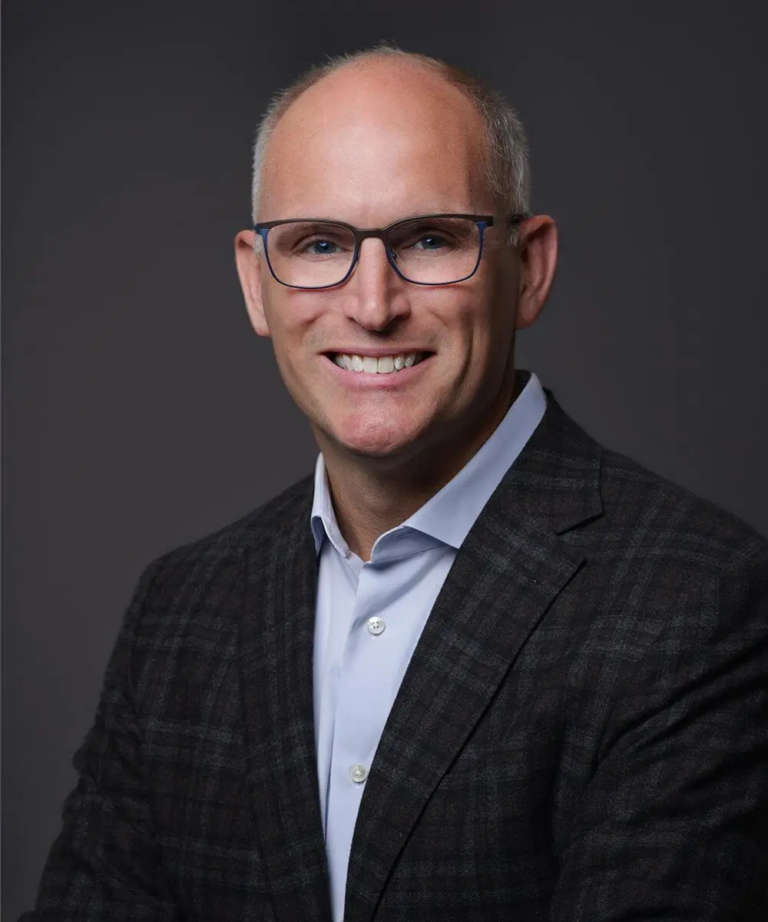
Welcome to today’s webinar: “What Today’s Headlines Mean for Investors.” We’re happy to have you with us, and we’re happy to welcome Apollo Lupescu. Apollo is an experienced PhD economist at Dimensional Fund Advisors, a premier global investment manager with about $1 trillion in assets under management.
[00:22.2]
Known for his ability to translate complex investment concepts into clear, accessible language, Apollo has earned the nickname “The Secret of Explaining Stuff.” He’s a globally recognized speaker who has delivered hundreds of lectures and town hall events to financial professionals and individual investors on various investment and market-related topics.
[00:41.1]
Apollo brings more than two decades of experience at Dimensional, where he applies the analytical rigor developed during his earlier career teaching at the University of California. He holds a PhD in economics and finance from UC Santa Barbara and a BA in economics from Michigan State University.
[00:58.9]
Go Green. He competed in and coached water polo there. These days, when he is not helping clients navigate market volatility, you might find him navigating actual waves in the ocean — surfing is a new challenge for him. Welcome, Apollo, and thanks for being with us again.
[01:15.1]
Last time was pre-COVID when you visited our office, so it’s nice to see you, Steve. Great to see you. Thank you so much for the invitation. Funny enough, just not long ago I pulled out my favorite hat, which does happen to be the Michigan State water polo hat — still with me 25 years later.
[01:33.7]
So it’s always great fun to talk to you and the folks in Michigan. I still have a great affinity for that state. I love it. Well, today is not about predicting the market — it’s about how to behave inside of them.
[01:50.1]
And it does seem like geopolitics is dominating the news cycle right now, so maybe we should begin there if you think that’s a good place to start. Yeah, absolutely. Because there’s so much going on, and before we get into the market and financial aspects of this situation — the Middle East and the conflict with Iran — it’s probably worthwhile taking a step back and acknowledging that there’s a human element to this, and it’s real.
[02:17.4]
There are U.S. soldiers who are deployed and in harm’s way. You read in the press that there are civilizations under threat, and this is really emotional. It touches our deeply held beliefs and our core identity as individuals.
[02:36.9]
And I think we need to start there by acknowledging the suffering — whatever side you’re on, this is horrific. And what I mean by “whatever side you’re on” is: whether you’re the Iranian people subjugated by their government, or the U.S.
[02:53.7]
soldier in harm’s way — that’s real. It’s painful to see those images. And Steve, the reason I want to start there is because those emotions are what make us human. They’re perfectly fine to have, and I’m not ashamed of them.
[03:08.9]
I have them as well. What I’ve learned over the years is that when it comes to investing, the really successful investors are able to acknowledge their emotions and, at the same time, take a step back and be very pragmatic in the way they make decisions about their money.
[03:26.5]
They don’t make these decisions based on how they feel in those emotional moments, but rather on something much more pragmatic — rooted in data and evidence, in how things actually work in terms of finance. And in that respect, I have to start with just the fundamental principle around the stock market.
[03:44.8]
When you buy a share of Ford, of GM, of Coca-Cola — you name it — you become a part owner of that business. And what the stock market is trying to assess every single day is: how much should one pay to get ownership into a business?
[04:05.1]
And what the market is fundamentally asking — with this conflict, and when it started — is: how is this event impacting the ability of companies to make money? Because ultimately, the value of any business comes from that.
[04:22.3]
So it is a cold, hard question. It’s not about morality, but rather the pragmatic question of what impact this geopolitical conflict creates on a business. And when the bombing of Tehran happened on Saturday, when the market opened on Monday, what you saw was — for example — a U.S. airline that had a lot of flights in the Middle East that were canceled.
[04:49.7]
Well, that’s a negative impact, and you saw that stock dropping by 3–4% that day. At the same time, a U.S. defense contractor that was likely to produce more munitions or radar equipment — that stock popped up by 3–4%.
[05:07.6]
So the same geopolitical conflict had different outcomes for different companies, based on the impact on their bottom line — not just this year, but for years down the road. And if you look across the entire U.S. stock market that Monday, what you saw is that it was very flat — it didn’t move much.
[05:26.8]
And it’s not because market participants were asleep and just woke up on Monday saying, “Oh, there was a bombing over the weekend.” No — they knew. Everything was clear. It’s just that, based on everything we knew on Monday, the impact on U.S. companies was relatively muted.
[05:43.0]
Coca-Cola, Nvidia, Facebook, Google — how much would their earnings be impacted by the bombing of Iran? I’m not sure, but I don’t think Apple sells that many new iPhones there. I’m not sure how many Starbucks are around there either.
[05:58.3]
So that’s what the market reflected: flat — not because of any moral judgment, but because the bottom-line impact to many companies was muted. Now, a few days later, Iran’s strategy emerged — which was unknown at the beginning — and that was to shut down the Strait of Hormuz.
[06:15.0]
And suddenly everyone became a geography expert. When that happened, the consequence was that about a fifth of the world’s oil could not pass through there. So now you have a situation where there’s a significant problem: not enough oil.
[06:30.9]
20% — a fifth of the world’s oil supply — cut off. That creates problems. And the biggest problem is that oil prices would go up. And that’s exactly what happened. That had implications for a company like McDonald’s, for example, because if people have to spend more money on gas, maybe they won’t have money left to buy a Happy Meal.
[06:50.8]
And that’s why you saw a lot of firms drop. So for the third month of this year — March, which was the full month of conflict — the U.S. stock market was down roughly 5%. That’s a signal that, yeah, it’s not pleasant, but it’s really not catastrophic.
[07:07.9]
And in fact, what’s even more interesting — and this is kind of a quick note, Steve — when you measure the U.S. stock market, you look at the largest stocks. For the first three months of the year, the market was down about 4.3%, and it was pretty even after the first two months.
[07:26.0]
March was the month it dropped. But the way you measure performance, you look at the underlying results of individual stocks — and one other thing that matters is the size of a company. So when you look at the Magnificent Seven — Nvidia, Microsoft, Apple, Facebook, Amazon, Google, and Tesla — they’re not only large and important in terms of technology, but they’re also very impactful to the market. The market was down about 4.3% for the quarter.
[08:03.3]
And yet, on average, those seven companies were down not 4.3%, but significantly more — 11.3%. They left a hole in the S&P. So if you look at the remaining performance of all the other stocks in the U.S. market — the S&P 500 minus the Magnificent Seven, or the S&P 493 — their performance was pretty much even.
[08:27.0]
It was around negative 0.7%. So the reason I bring this up, Steve, is that when you look at the impact of this conflict, the signal from the market is that while what’s going on is emotionally charged, when it comes to the ability of U.S.
[08:43.3]
companies to make money, it may not be the primary driver of why the market moved. I don’t believe that Nvidia, Apple, or Microsoft are that deeply tied to the Middle East and oil — which was one of the main consequences.
[08:59.4]
So the first point is that when you look at the data, we don’t see that this particular event had a huge impact on the U.S. market, because many U.S. companies are likely not going to be significantly impacted — particularly if oil prices don’t stay high for very long.
[09:16.8]
The second point is that when a situation like this happens, what we see over and over is that there is human ingenuity and resilience that translates into companies being resilient, markets being resilient, and countries being resilient.
[09:33.5]
In other words, when faced with these unprecedented challenges, quite often companies and countries rise to the occasion — and quite often, at the back end, they may emerge stronger.
[09:50.0]
Look at the pandemic — it was a horrific time, and yet companies didn’t fold. They figured out how to navigate, and many came out stronger. And if you look at the oil crisis — because a lot of folks are pointing to that comparison — I want to remind people that the first big oil crisis this country experienced was in 1973–74, when OPEC, the Organization of Petroleum Exporting Countries, decided not to send oil to the U.S. At the time, we didn’t produce much oil at home.
[10:21.5]
Very little at the time. And the result was this: there was no gas — at any price. Why? Because the government capped the price of gas. It went from 40 cents to 50 cents a gallon and couldn’t go any higher.
[10:37.0]
So price was not being used as a rationing mechanism. Imagine being at the back of that line, sitting there for hours — maybe days — thinking: “Wow, this is the end of the world. This is as bad as I’ve seen.” And it was absolutely terrible. It was terrifying.
[10:53.2]
You or your parents may remember something like that. But what emerged from that was the idea of energy independence. And 50 years later, the U.S. is now energy independent — we produce more oil at home than we need. We export oil. We export natural gas.
[11:08.6]
But it all started with that crisis. So it’s quite possible that the current situation could lead to some positives down the road, even though right now it feels so negative.
[11:25.4]
The third point I want to make is this: I’ve heard enough investors say, “We need to do something. The world’s falling apart — we need to do something.” And you have to be very careful with that reasoning, because quite often that is an emotional response, not a pragmatic one.
[11:42.2]
And most often when people say “we need to do something,” what they mean is: “I don’t like the risk. I don’t like where this is going. Let’s sell.” And when you do that, it turns out it’s not really the best approach — because again, it’s an emotional response.
[11:58.5]
So this idea of needing to do something — it’s a legitimate feeling. What I would argue, though, is that if you see the market dropping — which it has — instead of selling in a panic, a better strategy is to have a system in place that tells you what adjustments to make when the market moves. And that’s what GEM does.
[12:20.3]
What GEM does, for example, is that if they need to maintain a balance between stocks and bonds — ownership versus lending, two different types of investments — and stocks drop (the ownership piece), instead of selling more in a panic, they could trim some of the gains from bonds and then replenish the stock portion.
[12:41.9]
That means you’ve taken some chips off the table and bought something that now has better value. That process is called rebalancing. So when you think about what to do as an investor, the better strategy is to rebalance rather than sell in a panic. Which leads me to the fourth point.
[12:57.9]
Steve, I’ll kind of wrap up with this. I’ve heard enough folks saying, “I’m losing so much. This is terrible.” And I have to say, quite often I keep wondering: what if? What if this whole geopolitical event — and others like it that may come — will have no significant impact on your ability to retire, or to generate income in retirement, or on your future plans?
[13:23.1]
What if that’s the case? And how can that be? Well, it turns out that probably the most important element in investing is not predicting when something happens or reacting to the news, but rather having a plan. And that’s what GEM delivers. You have a plan. And the plan accounts for your needs when you need money.
[13:40.7]
How much money do you need? It accounts for your assets and your working years. It accounts for your risk capacity, and ultimately builds some reserves so that if you need money at some point, you don’t have to sell falling stocks. That’s part of what makes it so powerful.
[13:57.5]
You don’t need to predict — you just need to plan. And to me, the clearest illustration is this: even though I lived in Michigan, I now live in L.A. And the one thing I know will happen where I live in Southern California is an earthquake. I’m under no illusion that I’ll live my whole life without one.
[14:14.1]
At some point there’ll be an earthquake. It’s not about predicting it — it’s about what you do to prepare. In my case, I bolted my house to the foundation. I keep water in the trunk. I tied the shelves to the wall. I did the things I could do to make sure I’m prepared for when that day comes.
[14:31.2]
And when it comes, it might not be pleasant — but it won’t be devastating, because I prepared. So even if you look at your accounts right now — if you look at a portfolio balanced between stocks and bonds for the first quarter — it’s pretty much flat. You’re not going to see tremendous losses, even though mentally you might think that’s the case.
[14:50.3]
So again, it’s all about not overreacting to the news, staying pragmatic, and letting the plan that GEM created for you do its thing. Thank you. That was a fantastic discussion about what’s affecting the world right now and the conflict with Iran.
[15:09.0]
Let’s move to what would have been the dominant topic if it weren’t for Iran: tariffs. I think there’s a lot of misunderstanding about tariffs right now. Right? Yeah. So tariffs — to begin with — it’s a very interesting topic. I remember when I first took an econ class at Michigan State, I kept hearing “tariffs, tariffs, tariffs.”
[15:28.8]
And I didn’t really understand what they were. I read the textbook, but even after that it wasn’t exactly clear. So it is a bit of economic jargon. Let me try to relate tariffs to everyday life and explain this in a cleaner way.
[15:49.0]
I’m going to use something that is near and dear to my heart to illustrate the point: maple syrup. I love maple syrup. I’m not Buddy the Elf, but I put it on a lot of things — maybe not spaghetti — and I get my maple syrup at Costco. So let’s illustrate the idea of tariffs with that.
[16:08.5]
Costco would like to sell maple syrup. So it goes to Vermont producers and asks: “Can I buy your maple syrup?” They say sure. It turns out there are a lot of people like me who love maple syrup, and there aren’t enough trees in Vermont — but there are a lot more just across the border in Canada.
[16:25.0]
So Costco also goes to those Canadian producers and asks: “Hey, friendly Canadian producer, can I buy your maple syrup? I’ll pay you $20 a bucket.” And those Canadian producers say, “Sure, I’ll sell it to you for $20 a bucket.”
[16:40.2]
Then Costco has to add a few dollars for the warehouse, the employees, their profit margin — let’s say another $5. So I can go pick it up for $25. Five for Costco, twenty for the producer. That’s the good old days — no tariffs.
[16:57.7]
And now President Trump comes along and says, “We’re going to impose a 25% tariff on everything that comes from Canada.” Let’s say maple syrup is included. How does it work? The entity legally responsible for sending the government a check equal to 25% of the value of what’s being imported is Costco — the importing company.
[17:22.5]
So if they bring in $20 worth of maple syrup, 25% of that is $5. They have to send the government a check for $5 immediately — even before they sell anything. So where is that $5 going to come from? Option one: they go to the producer and say, “Hey, friendly Canadian producer — the government wants us to send them five bucks. Why don’t you lower your price to $15? That way nothing changes for our consumers.”
[17:42.2]
What do you think those producers are going to say? No chance. “It costs me more to make it, and where else are you going to get maple syrup? It’s $20 — take it or leave it.”
[17:59.3]
And Costco has absolutely no recourse to force the producer to lower the price. So option two is that Costco absorbs the $5 themselves and sends it to the government. But if they do that, it’s not a sustainable business.
[18:16.3]
You can’t keep running a business that way. So option three is to raise the price, take the extra dollars, and send that to the government. So when it comes to tariffs, there are three parties involved: the producers, the importing company, and the consumers.
[18:33.7]
And even though legally it’s the importing company that’s supposed to pay the tariff, who actually ends up paying it isn’t clear at all — it depends on the product. What we know is that in the latest round of tariffs, when President Trump imposed them, the Federal Reserve did research and found that 90% of the tariffs were paid by U.S. importing companies and U.S. consumers.
[19:06.1]
Foreign producers paid about 10%. So there was a small contribution from producers, but 90% was borne by businesses that import and by consumers. It’s hard to disentangle exactly which is which.
[19:23.5]
But the evidence so far indicates that companies have been reluctant to pass much of that tariff cost on to consumers. Ford and GM, for example, took significant losses because of the tariffs they paid.
[19:40.7]
So it has burdened firms and consumers more than foreign producers. And it’s quite possible that firms might decide to start passing more of that cost to consumers — which is why you might see some prices rise.
[19:57.3]
But it really depends on the product. What I want you to understand is that ultimately someone has to pay this tariff. And so far the evidence is that it’s not the foreign producers — it’s either the companies importing into the U.S. or the consumers.
[20:13.0]
Now, what’s the impact on the stock market? It’s been interesting. Last year we had tariffs in the U.S., and if you look at U.S. market performance during that time, what you see is that the market was up about 17% — 16.8% to be precise.
[20:32.9]
That’s across the board — large companies, small companies. The U.S. market did well. In fact, the long-term average is 10%, so this significantly outperformed the long-term average.
[20:49.8]
Now, we’re the ones imposing the tariff — supposedly hurting other countries. So how did our trading partners do? One strategy might have been: let’s put more money into the U.S. now that we have an advantage.
[21:05.8]
Whereas foreign markets might be at a disadvantage. So let’s look at the three largest U.S. trading partners, starting with China. China faced tariffs of 145% — which, in my opinion, might as well be 599%, because once you get past a certain point, it just doesn’t matter.
[21:28.0]
But they dealt with those extremely high tariffs. And what you saw is that the Chinese stock market didn’t go up 17% — it went up 31.5%, significantly outperforming the U.S. market, despite being the target of such high tariffs.
[21:46.1]
Then look at Canada — right there to the north, our friends with the maple syrup. Their stock market, so dependent on exporting to the U.S., didn’t go up 16% or 31%. It went up 38% — more than twice the performance of the U.S. market.
[22:02.9]
And we also picked a trade fight with our friends to the south — Mexico. Their stock market didn’t go up 31% or 38%, but rather a whopping 54%. So what’s the story here? To me, a couple of things come to mind.
[22:21.6]
Number one: tariffs are one of many, many variables that drive stock market performance — but they don’t appear to be the primary one. And because of that, one should not make investment decisions based solely on tariffs.
[22:39.0]
It’s just not the primary driver. But more fundamentally, what this also tells us is a couple of things. One is that — the same way we talked about navigating geopolitical uncertainty — if companies face uncertainty around tariffs, they adapt. If Apple decides not to produce in China, they move production to India or Vietnam or somewhere else. They’ll still make it — just not necessarily in China.
[23:12.2]
But the other big point that I think is relevant is that the U.S. is about 5% of the global population and landmass — roughly — but 25% of the global economy. So it’s the largest economy in the world.
[23:28.8]
At the same time, you can look at it the other way: 75% of the world’s economies are outside the U.S. And what they’ve essentially said is: “Great — if you want to build a moat, build a tower and a castle, and not trade with anybody else, knock yourself out. We’ll carry on.”
[23:48.1]
The rest of the world is still open for trade. They’re still going to trade with each other. And 75% of the global economy is outside the U.S. If we don’t want to participate, they’ll do it without us. And that’s an interesting thing, because trade has benefited the U.S. by and large — not every segment of the population, not everyone.
[24:09.1]
And the question going forward is: is it possible that Canadian goods start going to Europe, and German cars go more to Asia than to the U.S.? It’s possible. Maybe there’s a benefit to this — or not. We don’t know yet.
[24:27.2]
What I can tell you right now is that if we don’t want to trade, that doesn’t mean the rest of the world — which represents 75% of the global economy — won’t. And we’ve seen a lot of trade agreements that simply don’t include the U.S., because we’ve become more restrictive.
[24:43.1]
It’s too early to tell what the full economic impact will be. But I can tell you as an investor: it still makes sense to be globally diversified. U.S. companies are still amazing. And it may also happen that a lot of global companies are going to do just fine without selling to the U.S.
[25:01.6]
Well, this wasn’t on our agenda — but could you talk about home country bias for a minute? Yeah. So as I said, what’s fascinating is: the U.S. economy is about 25% of the global economy.
[25:17.4]
But there’s another way to look at it as an investor — what is the combined value of all the companies you can buy and sell in any one country? If you redrew a world map — instead of using landmass, you plotted the value of all companies that investors can access, all companies that can be bought and sold on stock markets in each country — this is what that map would look like. The U.S.,
[25:45.5]
even though it’s 25% of the global economy, represents 65% — about two-thirds — of the value of all investable companies. And it starts with the Magnificent Seven: Google, Amazon, and so forth. But it also includes Shake Shack, McDonald’s — you name it. There are about 3,000 companies that investors can access in the U.S. So we are by far the largest stock market, and significantly larger than our share of the global economy.
[26:15.3]
And that makes sense, because Google is used by hundreds of millions of people worldwide. Everybody has an iPhone in their hands, or uses Android — which is operated by Google. Facebook has a billion users. That’s why the U.S.
[26:32.3]
is such a large part of the global market — because U.S. companies are just gigantic and used around the world. Now, if you look outside the U.S., Canada — even though it’s large by landmass — has a relatively modest share of global company value.
[26:51.0]
Canada has some natural resources and some banks, but not a significant market presence. The second largest stock market is Japan. And around the world, there are about 40 different stock markets.
[27:06.7]
Among them, there are about 10,000 companies in which you can buy ownership. So one decision investors have to make is: how much money do I put into each of these stock markets? If I had $100 to invest, I could buy proportionally to the value.
[27:30.6]
That would mean investing $65 in the U.S., $5 in Japan, and only $3 in China — because the companies available to U.S. investors there aren’t significant in size.
[27:49.3]
That approach is called market-cap weighting — the percentage you put in is based on the relative value of each market. That’s one way to approach this. Now, what Steve asked about is the idea of home bias. Home bias means: because we live in the U.S., because we use dollars, and maybe for some tax reasons — what if instead of 65%, we emphasize the U.S. and put $70 there, leaving only $30 outside the U.S. instead of $35?
[28:29.4]
So the idea of home bias is: do you use these percentages as your starting point and stick with them, or do you overweight the U.S.? And I have to say, there’s a bit of art and science to this. When Steve and the GEM team build portfolios, they really pay close attention to this and are very careful about how they allocate percentages across each market.
[28:57.3]
But that’s what home bias basically means: do you want to emphasize the U.S. market more because we live here, or keep it roughly neutral — in line with the percentages relative to global market capitalization? Perfect.
[29:13.5]
Well, we’ve talked about geography and economics. Now let’s move to computer science and talk about AI. The question I had for you is: what did investors get wrong in the late ’90s that feels familiar today?
[29:30.5]
Yeah, it’s a really interesting question. In the late ’90s — let’s actually go back to the early ’90s — pretty much like today, there was a revolutionary technology.
[29:48.4]
I don’t know about you, Steve, but I found it magical that I could go to a computer, type in a few things, and suddenly get information that otherwise would have required a trip to the library. It was magical. Pictures showing up on the screen. Amazing. That was the Internet.
[30:05.4]
And now, 35 years later, here’s another technology that seems magical: you speak into your phone in a normal voice and get a human-like response. That’s magical too. So if you want to draw parallels between the ’90s and today, there’s this same sense of something magical unfolding.
[30:28.4]
And at the end of the ’90s, as Steve mentioned, there was something called the dot-com bust. People got really shaken — we lost a lot of companies and money. So how does that relate to what’s going on today? Let’s go back to the ’90s and the Internet.
[30:48.6]
What’s remarkable, Steve, is that when you think about investing in the Internet back then, there was no single entity called “the Internet” — no monolithic investment you could make.
[31:03.6]
What you had were a bunch of companies. Think of them like horses in a race. The race was just getting started, they were all competing, and it wasn’t at all obvious which ones would win.
[31:20.7]
If I could take you back in a time machine to the mid-’90s — not with what you know today, but with the mindset of that time — and gave you three websites: one that sells toys for kids, one that sells books, and one that sells pet supplies.
[31:37.8]
And I asked you: which one will obviously become the future of Internet retail? Was it obvious it was the bookseller? Not at all. So as an investor, you have to accept that in order to own Amazon — the bookseller — you also had to own eToys and Pets.com.
[32:01.8]
And if you hyper-focused on the fact that eToys and Pets.com went out of business, you missed the fact that Amazon became Amazon. You missed the fact that the same period produced Google — a money-printing machine, a company that fundamentally changed the world and is now among the most successful in human history.
[32:25.9]
And again, if you focus only on the companies that went out of business, you miss the forest for the trees. That period generated some of the most amazing companies in human history. The fact that some companies went out of business — that’s not a bug, it’s a feature of the market.
[32:47.2]
And to me, we are in a similar moment today when people are looking at investing in AI. We’re not investing in AI as a single entity or monolithic investment — again, you have different horses in the race. And right now, is it obvious who the winners will be?
[33:05.1]
Not at all. The race is just getting started. But we do know that whoever wins is going to have enormous success down the road. And even if you could fund companies early on — you have to be careful. In Silicon Valley, those early-stage investors are called venture funds.
[33:27.2]
Firms like Andreessen Horowitz, Founders Fund, Benchmark, and Sequoia — famed funds that backed Facebook, Google, eBay, and Amazon early on — all did roughly the same thing.
[33:42.3]
When they put money into, say, ten companies, they know that roughly six are going to burn through the money, produce nothing, and go out of business. Two or three will chug along, maybe get acquired — nothing to brag about.
[33:57.7]
And one or two are the moonshots — the ones that make up for everybody else. That private equity logic is now permeating how people think about investing in AI. And what’s also really interesting is that it’s not that different from how the broader market operates.
[34:17.0]
If you look at the history of the U.S. stock market over the past 100 years, at the beginning of any 20-year cycle, there are roughly 3,000 companies. What’s remarkable is that by the end of that 20-year cycle, roughly 60% of those companies have disappeared.
[34:36.9]
They’re no longer part of the market. Only 40% of U.S. companies over the past 100 years have survived a 20-year cycle. It’s remarkable to think that 60% simply don’t exist anymore. And of those that survived, only about 18% actually outperformed the market.
[34:57.2]
In other words, if you look at 10 stocks — or five stocks — four out of five are either going to underperform or go out of business. It’s only that 18% that does well.
[35:15.3]
I wish I knew which ones they’d be. Everybody’s looking for those. We’ve studied this extensively, and there’s no reliable predictor. But it’s the same with the market, and the same with AI: you have to spread your bets. You cannot place one big bet on a single horse, because if it doesn’t win, you’re done.
[35:35.3]
That’s been the issue. So I don’t look at the ’90s as something that went horribly wrong — the expectations were simply too high for what that technology could deliver in the short term. But the companies that did survive absolutely made up for the ones that didn’t. You just have to spread your bets.
[35:51.5]
You cannot concentrate. Whether it’s the Magnificent Seven or any other category of stocks — the best strategy, in my opinion, is to go around the world, buy as many stocks as possible, and avoid concentration in any one type.
[36:14.0]
Just spread your bets as much as you can, because somebody will do well — you just don’t know which one it will be. Thank you. That seems like a good transition into valuations. The Magnificent Seven, as you mentioned, are down for the quarter but still up strongly over the past 10 years.
[36:34.9]
So when valuations are as high as they are for growth companies, what changes for long-term investors? Yeah, great question. Let’s demystify valuation. What exactly is it? Like “tariff,” I find it’s a bit of jargon. Let’s use an AI company — in fact, let’s use a company that has bet its entire future on AI.
[36:59.1]
And I’m referring to Tesla. They announced not too long ago that they would stop making their most profitable models — the Model S and Model X — because they want to focus entirely on AI.
[37:14.8]
So how do you think about AI and valuations, and what does it actually mean? At the beginning of the year, if you wanted to buy one share of ownership in Tesla, the price was roughly $450.
[37:32.8]
So if you had $450, you could buy yourself a really nice coat, or take your spouse to a really nice dinner — or buy one share of Tesla. So what do you get for that ownership? Well, you’re not buying hope. You’re buying something very tangible.
[37:48.0]
You are now a part owner of that business — not as much as Elon Musk, but you own a piece of that company. And anytime you own a business, you are entitled to a portion of the earnings it generates. If I’m part owner of a restaurant,
[38:06.0]
and the restaurant makes money, I make money. Same idea here — you partake in the earnings. So what were the earnings associated with that one Tesla share? When the share was selling for $450, the earnings associated with that one share were $1.50.
[38:26.1]
So let’s reframe this. You just spent $450, and at the current rate of earnings, Tesla puts $1.50 per year into your pocket. At that level of earnings, how many years will it take to recoup your initial investment?
[38:50.6]
You spent $450 and you’re getting $1.50 per year. Well, it’s not that complicated — it’s about 300 years. That’s what valuation is, intuitively: if you look at today’s earnings and how much you paid, how long before you get your money back?
[39:09.0]
That’s the intuition. In technical jargon, this is called the price-to-earnings ratio. It’s a relatively expensive proposition — a very long time to recoup the initial investment. To compare: look at Toyota.
[39:27.4]
Nothing to do with AI — just gasoline and hybrid engines. When Tesla was selling for $450, Toyota’s share was less than half that: $215. And Toyota’s earnings were not $1.50, but roughly $20 per share — meaning your payback period was about 10 years.
[39:46.9]
So in a sense, that’s what valuation reflects: how much are you paying for what a company earns today? And the question I got from investors is: why would anybody buy Tesla when Toyota seems like a much better deal?
[40:04.7]
And the reason is that Toyota is a pretty steady business — nobody expects it to shoot the lights out. But with Tesla, investors are willing to pay so much because they expect that down the road — maybe not today, but at some point — Tesla is going to turn on the money spigot and generate enormous profits. Just you wait.
[40:30.2]
Just you wait. Elon Musk is going to figure it out, and Tesla is going to be rolling in it — and you’ll be glad you paid $450 when you did. So the reason the price is so high is the expectation of future fortunes, even if the company isn’t making much money today.
[40:51.0]
And that’s possible. I wouldn’t necessarily bet against Elon Musk. If 25 years ago, Steve, you’d had dinner with him and he told you he wanted to build a rocket company — and you said, “Listen, in the history of mankind, only certain governments have ever been able to launch a rocket.
[41:09.9]
What are you talking about?” And yet he actually did it. So you have to be careful about betting against that kind of vision. Maybe that expectation is worthwhile, and maybe that’s why you’d want to own a piece of Tesla. But it is a very expensive proposition. That’s what valuations mean. And if you look across the Magnificent Seven,
[41:27.5]
and examine their valuations at the start of the year — that is, the price-to-earnings ratio and the intuition of the break-even period — you’ll see that Tesla is a bit of an outlier. The long-term market average is in the 20s, and the only company in that range among the seven is Facebook — whose parent company is called Meta.
[41:45.9]
And for Google, the parent company is Alphabet. So if you take the mid-20s as the long-term market average, what you see is that Apple, Amazon, Microsoft, and Google all have valuations about 50% higher than that long-term average — reflecting the expectation that just you wait until they really start making money.
[42:09.3]
So it’s okay to pay a lot for them now because they will make money down the road. Nvidia is trading at twice the long-term market average, because expectations for what they’ll produce are very high. And among the seven of them, on average, their price-to-earnings ratio is about 68.
[42:27.6]
What’s fascinating, though, is that the S&P 493 — the rest of the stocks in the U.S. market — when you look at their valuations, they’re a lot more reasonable. Very close to — and in some cases just slightly above — the long-term market average. A fraction of the Magnificent Seven. And within the U.S. stock market, there are not only those large companies in the S&P, but about 2,000 additional smaller companies.
[42:49.3]
And the valuation for those companies is a lot more reasonable — below the long-term market average. And within that, there’s a small-cap value component that looks even better from a valuation perspective. So not every company in the U.S. is highly valued.
[43:08.2]
The Magnificent Seven are valued much higher because of the expectation that they will generate great fortunes. And it’s possible. It’s just that right now there are also really good opportunities elsewhere. And in fact this year, small companies have been positive. Small-cap value has done really well.
[43:25.9]
And that’s what a good plan looks like — not just the Magnificent Seven, but companies around the world and across the U.S., being more broadly diversified than just the Magnificent Seven and the S&P 500. Thank you.
[43:41.6]
I think for our next topic we’ll combine two things: market downturns — what to do in one — and the value of a financial planner. Yeah, let’s start there. That’s a nice way to spend our last 15 minutes. Let’s start with the idea of market downturns.
[44:01.0]
Earlier in the year, a word that kept appearing in the news was “correction.” There’s a correction in the market. And I want to demystify what these words actually mean when you hear them.
[44:18.7]
In my lifetime — I was born in 1969 — there have been about 28 different corrections. The way I think about corrections is that they’re like the baby bear, the bear cub. It means the market has dropped by about 10%. And when you hear that a 10% drop has occurred, you have a correction.
[44:38.6]
Corrections happen, on average, every two years. They’re not uncommon. It’s only a 10% drop, so it doesn’t always signal fear. People aren’t always that concerned when they hear “correction.” They’re a lot more concerned when they hear “bear market.”
[44:56.7]
A bear market is not a 10% drop, but a 20% drop. And again, in my lifetime since 1969, we have had eight of those — which means, on average, it happens every seven years. And this is where it gets interesting.
[45:12.7]
Because when people hear “bear market,” they’re scared. And because it doesn’t happen as often, it feels like: “Wow, we haven’t seen one for a while — that’s bad.” And that tends to heighten the sense of anxiety about being invested in the U.S. market.
[45:30.0]
And that’s legitimate. Because again, bear markets don’t happen every two years like corrections do — on average it’s every seven years. But I also found something interesting, Steve: in my lifetime, there have been market downturns
[45:47.1]
even greater than a bear market. And that made me think — what’s greater than a bear market? It’s a grizzly bear market. That is a 30% drop. And those tend to be prolonged and very painful for investors.
[46:07.9]
In my lifetime, there have only been about three of these downturns. On average, they happen every 18 years. The last time we had one was in 2008 — so we’re coming up on exactly 18 years. But averages mean nothing in isolation.
[46:24.5]
If you put your feet in boiling water and your head in a freezer, on average you’re comfortable. So don’t read too much into it. The first grizzly bear market was in 1973, and then it took 27 years until the next one. So the average is no guarantee. But it is important to step back and acknowledge that every once in a while, the market does have these really steep, prolonged downturns — and to know that it’s not unusual, it’s not unprecedented, and they do happen.
[46:57.1]
And what can you do about it? The first thing is to manage your expectations of how long they last. The first one happened during the oil crisis I mentioned — 1973–74. If you had invested $1 in December of 1972, how many months would it have taken for you to recover that money and break even — to return to the same level you were at in December of 1972?
[47:31.1]
And the answer, Steve, is actually surprising to a lot of people: 91 months. Ninety-one months of looking at the news and seeing: still down. Still down. It wasn’t until July 31, 1980, that the market recovered.
[47:51.0]
So it can be a very, very long time for the market to recover. Now, the question is: what can you do about it? Is there anything that can shorten that, or perhaps reduce the steepness of the drop? Yes — there are four things we believe you can do.
[48:10.0]
The first is: when the market drops, instead of selling in a panic, keep investing. It sounds counterintuitive, but you can do it.
[48:25.1]
And the simplest way is not to take the dividends — the payments companies make to shareholders — and stash them away. Instead, simply reinvest those dividends. Dividends are part of the profits companies pay to you as a shareholder.
[48:44.9]
And if you simply do that, what’s amazing is that instead of 91 months, you would break even in about three and a half years — half the time. You’d be back in black in half the time. That’s a really powerful outcome just from not getting scared and continuing to reinvest.
[49:04.2]
The simplest way to do it is reinvest the dividends. Now, what else can you do? The S&P 500 represents the large, well-established, mature U.S. companies — but there are also smaller ones.
[49:19.6]
We talked about smaller companies in the U.S. What if we add a proportion of those? What if we look internationally — as we discussed — and add some component of international stocks? And what if we balance everything with some bonds, which are a form of lending and have a very different dynamic than the stock market?
[49:39.3]
And if you just create a very basic, typical allocation — and yours is actually more sophisticated than this — but if you simply look at a basic allocation and compare the results, what you see is that in 1973–74, it took 91 months to recover.
[49:57.1]
And at the worst point, the drop was 46% — the biggest loss you would have seen. But if you did these four things — reinvested dividends, added some small-cap, international, and bond exposure — instead of 91 months, you would have cut that down to about three years.
[50:13.0]
In three years, you’re back in black. Both the time to recovery and the magnitude of the loss are significantly better. So it turns out you actually can do something about it.
[50:28.9]
You cannot avoid the loss entirely, but you can mitigate both the time to recovery and the maximum drawdown. The second of these grizzly bear markets was the dot-com bust. And Steve mentioned that. In that period, it took 81 months for the market to recover.
[50:46.3]
And at the worst point, it was down 46%. If you had implemented the strategy we talked about, instead of 81 months, you would have recovered in about half that time — roughly three years. And at the worst point, the drawdown would have been 20%, not 46%.
[51:04.0]
So once again, a significantly improved outcome if you use this strategy. And the latest grizzly bear market was the Great Financial Crisis — the GFC — in 2008. That took over five years — almost five and a half years — to recover.
[51:20.3]
And at the worst point, the loss was 53%. Significant. With this strategy, you would have been back in about three years, and the maximum drawdown would have been meaningfully smaller.
[51:36.3]
So in every single one of these grizzly bear markets, what you see is that while you may not be able to avoid loss entirely, you can significantly improve both the time to recovery and the maximum drawdown.
[51:53.8]
By reinvesting dividends, adding some small-cap, international, and bond exposure — being diversified around the world. And ultimately, having that plan. Because if you’re closer to retirement, or already in retirement, you may have even more in bonds, and those recovery times and drawdowns would be even shorter.
[52:17.2]
So that’s more of a fire drill — just a reminder that if it happens, you’ve seen this data. And if you can remind yourself: “I know this has happened before. The markets have been resilient. We don’t need to panic.”
[52:39.0]
And over and over I hear people say, “Yeah, but it’s different this time.” We’ve heard that before too. And even in the absolute worst-case scenarios — before my lifetime, and probably the worst in modern history in terms of geopolitical events — it was World War II. You can look at the data even for that period and see what it means to stay disciplined and have confidence in markets.
[53:10.6]
Because if you go back to September of 1939, when the bombs are falling and the war is starting, and then fast forward to the end of August 1945 when the war ended — and you simply said, as an investor, “I’m going to stay disciplined. I’m not going to get carried away by emotions.”
[53:29.4]
What’s amazing is that a dollar invested at the beginning of the war would have pretty much doubled during those six years of World War II. And obviously, the U.S. was pulled into the war in December 1941, with Pearl Harbor. But if you look at the full years of U.S. engagement, the market went up every single year.
[53:48.2]
So wherever you look, it’s kind of amazing. And the story here is not that war is good for business — not at all. War is terrible for business. But the more fundamental premise that gives me confidence — and what I’ve been talking about throughout — is the ingenuity and resilience of companies. They figure out how to navigate.
[54:08.7]
And in the case of Michigan — I lived in Lansing and had a lot of friends who worked in the auto business. If you look at the auto industry back when soldiers were fighting in Europe or Asia, companies really didn’t have much of a domestic customer base.
[54:26.3]
So what did they do? If you were Cadillac, you took your engine and put it into a tank. There was a Cadillac tank — I’m not sure it had power windows and leather seats, but that was a Cadillac tank. Ford started making airplanes and selling them to the government.
[54:41.6]
When you think about “Built Ford Tough” — it’s not really the F-150. It’s the tanks they built during the war and sold to the government. And Jeep — a great company with a lot of manufacturing in the Midwest — started as a company making vehicles for the Army.
[55:01.6]
So to me, the confidence I have is in the resilience of companies. They’ll figure it out — even through grizzly bear markets, they’ll work it out. They will find a way to navigate and make it work.
[55:16.7]
And that’s the beauty of free markets. As long as we operate in free markets, I have confidence in the markets — even through grizzly bear markets, even if there are more to come. So that’s a cautionary note about markets, but also a very hopeful one: about the idea of free markets and participating in the ownership of these companies.
[55:37.5]
And the last thing I want to touch on is exactly that — the benefit of working with advisors. When I look at what advisors do — and I’ve been to your offices, maybe six or seven years ago now — what’s interesting is that it’s not one single thing advisors bring to the table. It really ties into the full range of needs that families have.
[56:06.6]
The first element of what advisors bring is what I consider competence. And competence is cornerstone to what advisors deliver, because they have the experience, credentials, and expertise to serve clients like you in areas such as creating a custom financial plan — which, as I said, is hugely important.
[56:27.3]
It could be in investment selection — what stocks, mutual funds, or ETFs to buy — but also investment monitoring to make sure everything does what it’s supposed to. It could be in creating an asset allocation, in rebalancing (as we discussed), in estate planning, in taxes, in how to generate income in retirement, and in risk management — insurance and so forth.
[56:49.8]
All of these are competencies that advisors have — and they’re fundamental to a successful investment experience. And then beyond competence, there’s an element of coaching: education, like what we’re doing right now. It’s not a product pitch — just helping you understand a little better how the world works, making sure you manage your emotions.
[57:10.9]
We’ve talked a lot about the importance of controlling emotions and managing stress. When things are stressful, you can call Steve and the team and get an answer. It could be about how you spend and how you save — and it’s not always just “save more, spend less.” Sometimes it’s the other way around.
[57:27.2]
Hey, you’ve built a lot — you’re doing okay. Having a trusted second opinion: “Is it smart to do this with my money?” And in general, maybe maximizing well-being — not racing to see how much money you can make, but figuring out how you can have the best life possible. So there’s competence, there’s coaching.
[57:45.4]
There’s also convenience. Convenience means that even if you could theoretically do this yourself, delegating it to someone who’s competent earns you time savings. You can spend more time on what’s important to you and your family.
[58:03.5]
It’s also great personalized service — you always have a quick, correct response. It could be vendor management: what are the right vendors that are secure, safe, and fairly priced? Coordination with other trusted professionals.
[58:19.3]
And ultimately, what I think of as the elegance of simplicity: all the pieces of your financial life in one easy-to-access place. But Steve, there’s one other element I’ve seen — with your firm and with a lot of other boutique advisory firms like yours — which is not just competence, coaching, and convenience, but this idea of continuity. Quite often, there’s one person in the family who handles the money, and everyone else is on the outside.
[58:45.2]
And you know — knock on wood — if something happens, who do you call? Where is the money? Who do you trust? To me, it’s really important to have both spouses involved, making sure they both know not only where the money is, but that they’ve created shared financial goals — that everyone knows what’s available and what’s feasible.
[59:07.1]
There’s also the element of getting the kids financially literate and involved early, so they don’t make costly mistakes with their money. And maybe multigenerational planning — in some cases, passing on family values. How do we pass not just money, but what matters? That could be philanthropy if you’re looking to give, or if you have enough to create a legacy and a foundation.
[59:29.7]
That’s also important to many people. So when I look at all of these activities — what GEM provides — it’s not just about a financial plan or investment selection. It’s much more fundamental than that. What I believe they ultimately provide is peace of mind.
[59:49.1]
“I work with someone who knows what they’re doing, I have a good relationship, they understand me, and I’m going to be okay with my money.” I think that’s the biggest thing advisors provide to their clients: peace of mind. Knowing that we have a plan — a plan built to withstand times like this.
[60:07.3]
And someone who understands us as a family, knows what’s important to us, and makes sure we can accomplish our goals. Well, maybe we have time for one more quick question — and it should be an easy one. What one belief must an investor hold to stay disciplined for a lifetime? Free markets.
[60:29.9]
That’s the easy one. Perfect. You have to believe in free markets — because in free markets, companies and individuals will be ingenious, and that ingenuity translates into individuals being resilient.
[60:47.1]
You figure out how to get through hard times. That makes companies resilient, which makes markets resilient. So it’s all about free markets, in my opinion. As long as companies are allowed to innovate and be dynamic — that’s the number one thing. Well, Apollo, I want to thank you for taking this hour with us.
[61:05.3]
I think it was really helpful — at the beginning, separating the very real human impact of the conflict in Iran from its separate but important effect on U.S. markets, while not forgetting that this is fundamentally a human event. Thank you also for helping us better understand tariffs, which is a source of constant confusion, and for your perspective on how to approach AI through investing.
[61:27.9]
And I think what’s going to stick with all of us is how to thrive in a grizzly bear market. I don’t think I’ve seen one yet — but we’re going to delve into that much more in upcoming conversations: how to thrive and treat those periods as an opportunity. And then the value of advice.
[61:46.1]
Thank you so much. Is there anything else you’d like to say as we close? Well, thank you for the invitation to be part of this. I really appreciate it. It’s been great fun talking with you. I look forward to visiting Michigan sometime soon. We’ll see you soon. All right. Bye-bye. Bye, Apollo.